" However we needed to take an action back and think systemically and thoroughly about the work we were doing." No little endeavor for a 21-school, 16,000-student school district, with high levels of poverty and a big immigrant population. Joe O'Callaghan The district employed the Kid Health and Advancement Institute of Connecticut (CHDI) to audit psychological health programs.
This new "continuum of care" is now the central renter of Stamford's rejuvenated program, in addition to intensive training of all personnel Great site in mental health issues and data collection, an area that had been sorely lacking. The district worked with CHDI to release Cognitive Behavioral Intervention for Trauma in Schools (CBITS), a school-based program for students grades 512, who have experienced traumatic events and are suffering from post-traumatic stress disorder.
By 2017, Stamford Public Schools had actually broadened the number of evidence-based services for students from zero to four, executed district-wide injury and behavioral health training and supports for personnel, and integrated community and state resources and services for students. The objective, explains O'Callaghan, is to create a self-sustaining, internal program.
There's nothing incorrect with that design, but we're training our own personnel to create our own institutional competence." Doing so offers a layer of security against budget cuts or grants approaching expiration. Even in the face of prospective budget tightening up, "we're fortunate to be part of a neighborhood that has a long history of supporting what we do," he adds.
" We can always do more, however I believe we're seeing a more proactive, less reactive, approach." That shift is a critical very first action forward, says Theresa Nguyen, and is a sign of many schools and neighborhoods beginning to think about mental health early. "We're seeing progress that ideally will continue. We can't wait up until a trainee is at a crisis state.
Getty March 14, 2019 Corrected: March 14, 2019 Rates of mental-health occurrences amongst teenagers and young people have actually arced upward over the last decade while they've stayed fairly the same for older adults, a brand-new analysis discovers. The findings confirm what many teachers say has actually long appeared in their class.
How How Will Vr Affect Your Mental Health can Save You Time, Stress, and Money.
As psychologists explore triggers behind patterns in mental illnessprobing problems like an increase in mobile phone usage, economic patterns, and social isolation for cluesmore schools are engaging students themselves to seek services. They're teaching teens to build healthy routines, enacting programs designed to reinforce relationships, and bringing suicide avoidance work to trainees as young as grade school (how does food insecurity affect mental health).
Twenge co-authored the new analysis, released in the Journal of Abnormal Psychology Thursday, that depended on information from the National Survey of Drug Usage and Health, a yearly, nationally representative study of Americans 12 and older. In between 2005 and 2017, the proportion of teenagers 12-17 who reported the symptoms of a major depressive episode within the in 2015 rose from 8.7 percent to 13.2 percent, the information showed.
A respondent was deemed to have had a significant depressive episode if they verified they had experienced a minimum of 5 of 9 criteria specified by the American Psychiatric Association, including a "depressed state of mind" or "loss of interest or https://transformationstreatment1.blogspot.com/2020/06/prescription-drug-abuse-treatment-in.html enjoyment in daily activities." The survey uses somewhat different requirements for teenagers than for grownups.
The data show a "friend result," Twenge stated, suggesting a systemic cause. She indicated an increase in social media and smart device use as a possible cause. Heavy usage of such technology may add to less sleep and more social seclusion amongst teenagers and young adults, she stated, keeping in mind that recent upward patterns in psychological concerns associate with a growth in appeal of devices like iPhones.
" We can't alter genes, we can't alter childhood traumaBut we can assist them use their leisure time in a healthier method." But contending research study contends that screen time has a minimal mental result on adolescents, and some scientists have actually speculated that using social media has in fact assisted children create social bonds, specifically when kid-safe public spaces are limited (how does mental health affect school).
" If you currently have the propensity to have psychological illness and depression, then it often provides you that crutch to continue to self isolate," she said. Macbury's school registers about 175 trainees ages 16-21 who have struggled in a traditional high school. Expert counselors go to the school twice a week to fulfill one-on-one with trainees, support system assist them attend to specific difficulties, and teachers are accredited in a program developed by the National Alliance on Mental Disease to recognize and react to psychological health issues.
Rumored Buzz on How Does Social Media Affect Mental Health
For instance, instructors require students to track and show daily habitslike sleep, phone usage, and water intakeusing apps or worksheets to determine how they are connected to things like anxiety or engagement in class. The exercise is an "intentional and tactical" method to help students see the effects of the options they make daily and to establish a values system they can apply to other areas, Macbury stated - how can stress affect your mental health.
The district has actually likewise embraced a social-emotional knowing technique to assist students acknowledge and handle their feelings, said Antoinette Laiolo, the organizer of psychology and counseling programs. And it's teaching children as young as 6th grade to area indications of self-destructive ideas in their peers. "It's life or death," Laiolo stated.
And New York City and Virginia legislators have mandated that public schools develop curricula to teach trainees about psychological health. "In some cases we just insult those people who struggle," Virginia state Sen. Creigh Deeds, who sponsored his state's legislation, told NPR in 2018. "Mental health problems need to be provided the same self-respect as physical-health issues." In 2013, Deeds' 24-year-old boy attacked and stabbed his daddy before killing himself.
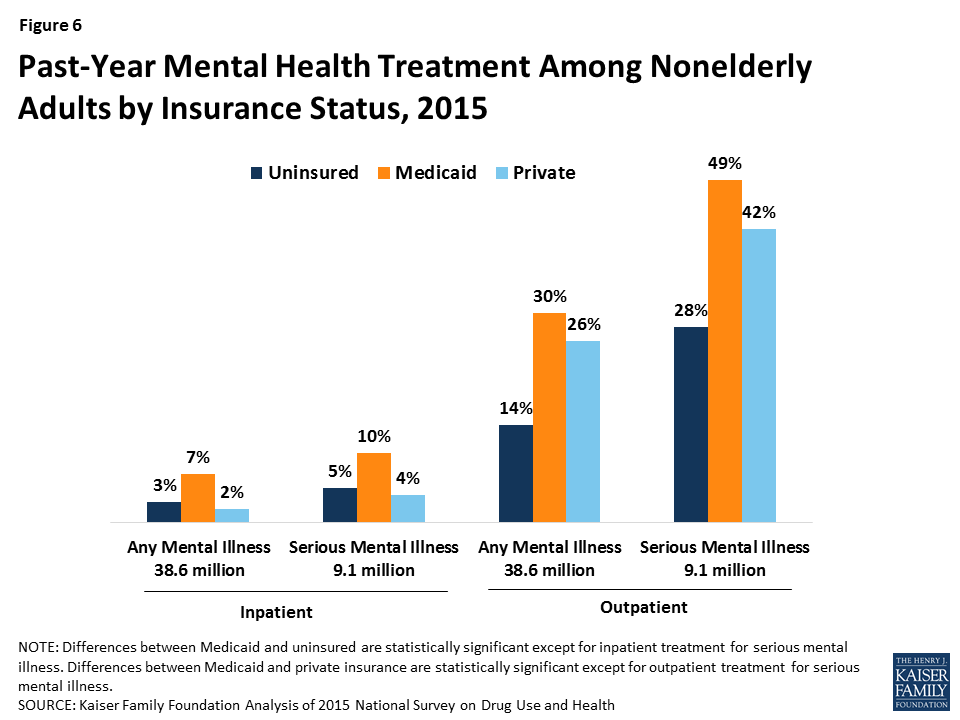
An absence of resources to address mental disorder is a concern for schools as well. Just 3 states fulfill the recommended ratio of a minimum of one school counselor for every 250 students, stated a current ACLU analysis of the most recent federal data, gathered by the U.S. Department of Education in 2015-16.
Those data come as policymakers require increased trainee supports in broader security arguments following two big school shootings in 2018. In spite of such calls, consisted of in a report by the Federal School Security Commission put together by President Donald Trump and in the findings of state-level job forces, schools still rush for funds to employ counselors, social workers, and assistance workers.
The school has an on-site clinic that accepts Medicaid and uses physical and mental health care to students. Educators utilize a trauma-informed approach, acknowledging the out-of-school factors that might have caused trainees psychological and mental damage. And 13 therapists support the school's students, 60 percent of whom are Native Hawaiian.
The Facts About How Does Mental Health Affect College Students Uncovered
Counselors determine destructive habits like cutting, and they do cognitive behavioral therapy, which helps them develop healthy methods to react to ideas and experiences that trigger anxiety. The school has likewise dealt with sociologists to establish techniques to group treatment that are responsive to native students' cultural backgrounds. That suggests putting more of a concentrate on communities than simply individuals, and helping students to consider their function within their families as they process their experiences, DeSoto stated.
" You can't move on on Maslow's hierarchy of requirements up until you start at the bottom." Vol. 38, Concern 26, Pages 1, 13 Published in Print: March 20, 2019, as.